What Is The Result Of Boiling The Impure Product With Too Much Solvent And Then Cooling On Ice?
What Is The Result Of Boiling The Impure Product With Too Much Solvent And Then Cooling On Ice?. Thus, we can conclude that the. If the compound dissolves completely, the solubility in the cold solvent is too high to be used for recrystallization.
For that reason, the following problems commonly occur: Insoluble impurities are then removed by rapid filtration of the hot mixture. If the compound dissolves completely, the solubility in the cold solvent is too high to be used for recrystallization.
The Result Of Boiling The Impure Product With Too Much Solvent And Then Cooling It On Ice Is The Crystallization Of The Pure Product, That Is, The Removal Of The Impurities Present In It.
Set the cold flask containing the newly formed crystals on a benchtop. If too much solvent is added in the recrystallization, a poor or no yield of crystals will result. Otherwise, heat the mixture in the test tube to boiling.
If You Don’t Warm Your Solvent To Boiling Temperature, You Will Not Benefit From
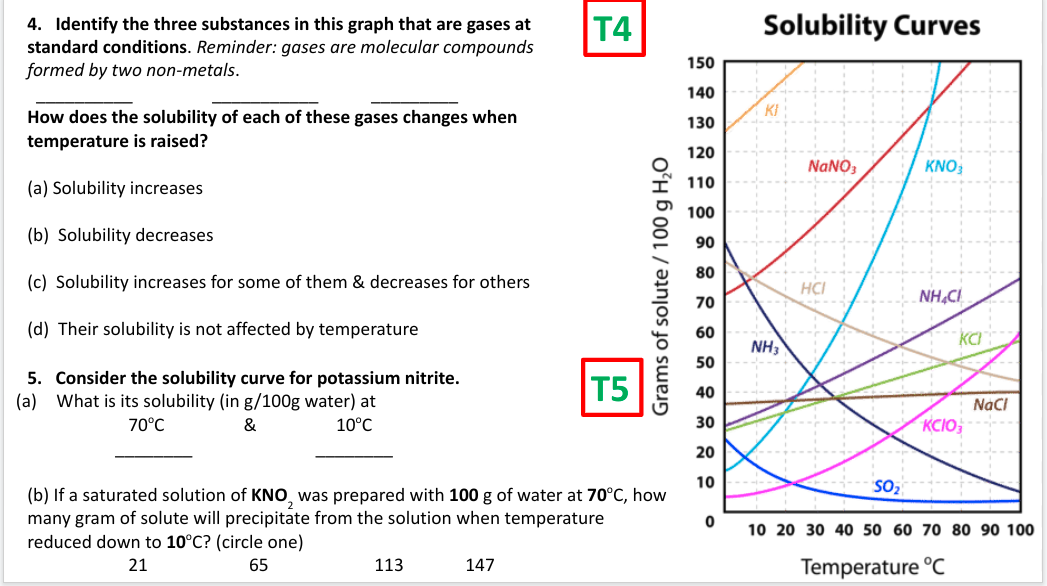
In addition the impurity either would be completely insoluble in the particular solvent at the high temperature, This process in chemistry is called recrystallization. The principle behind recrystallization is that the amount of solute that can be dissolved by a solvent increases with temperature.
Some Unnecessary Losses To Solvent Result From The Following:
What is the result of boiling the impure product with too much solvent and then cooling on ice. Hot (boiling) → room temperature → 0 ˚c (put in ice water bath) The solubility at 0°c is 0.15g/10ml, or 0.015g/ml.
At This High Temperature, The Solute Has A Greatly Increased Solubility In The Solvent, So A Much Smaller Quantity Of Hot Solvent Is.
Dichloromethane, methylene chloride (ch 2 cl 2) is useful as a solvent pair with ligroin, but its boiling point, 35 °c (95 °f), is too low to make it a good crystallization solvent. An impure solid may be purified by first dissolving it in the minimum quantity of a boiling solvent. Cooling immediately in an ice bath may result in crystals so small that they pass through filter paper, or crystals that still have a lot of impurities.
On Cooling, The Solution Will Be Too Dilute To Reach Saturation, And No Crystals Will Form.
If too much solvent is added in the recrystallization, a poor or no yield of crystals will result. Solvent would completely dissolve the compound to be purified at high temperature, usually the boiling point of the solvent, and the compound would be completely insoluble in that solvent at room temperature or at zero oc. If this still fails to work, then too much solvent was probably used.

Post a Comment for "What Is The Result Of Boiling The Impure Product With Too Much Solvent And Then Cooling On Ice?"